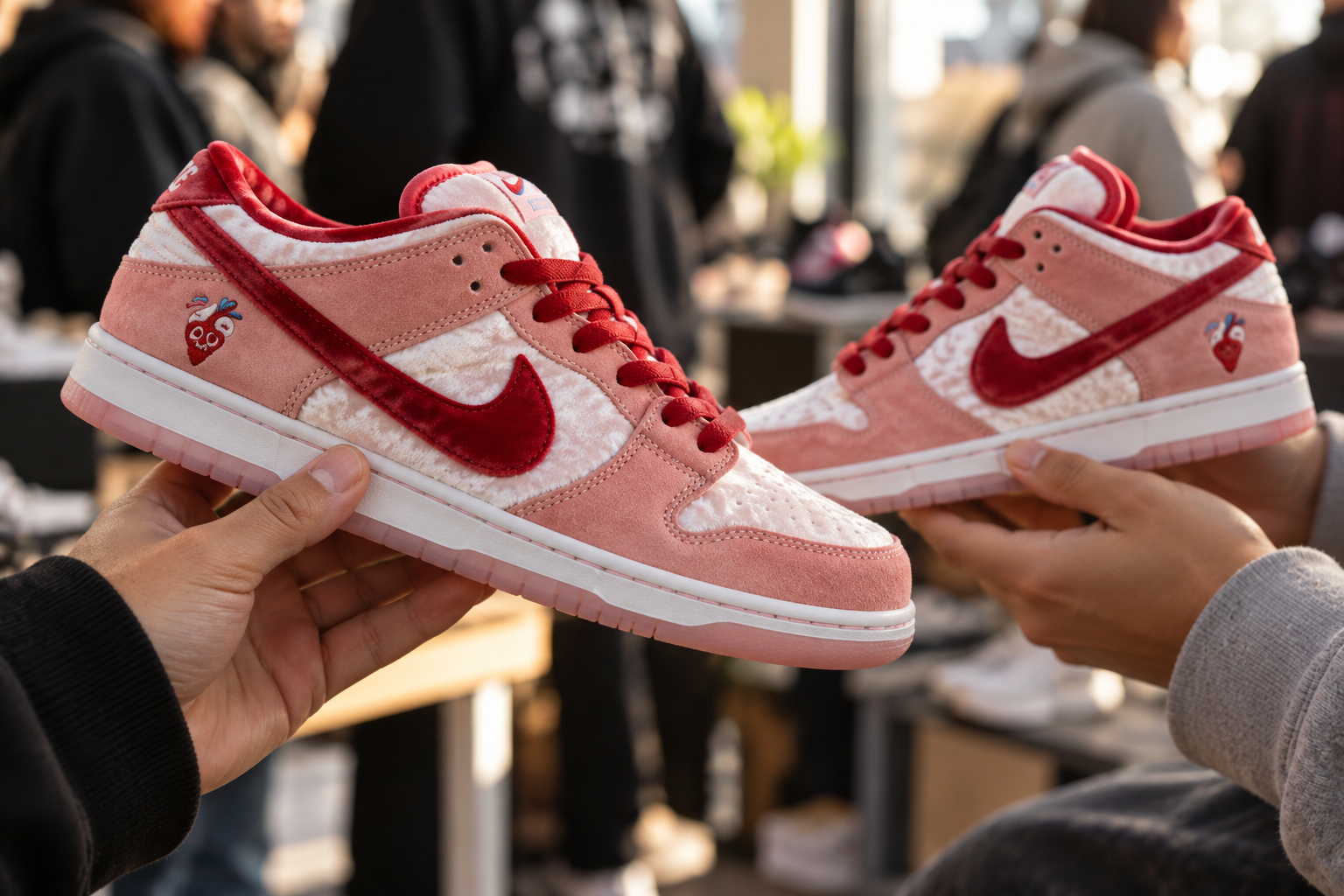
Sneakerhead culture is not defined by how many pairs someone owns. It is a shared language of design, memory, community and care.
More than the latest release
Being a sneakerhead is often reduced to chasing hype, but the culture is broader than a release calendar. It can begin with a pair someone saved for, a silhouette that recalls a moment in sport, or a design that feels connected to a place and a community.
For some people, collecting is the focus. For others, it is styling, restoration, photography, trading stories or simply finding a pair they will wear every week. There is no single way to belong.
A culture built by people
Sneaker culture grows through people sharing knowledge: how a model fits, where a design came from, how to care for a material, or why one release means something to them. Online communities make those conversations global, while local shops and meetups give them a place to happen face to face.
The most lasting collections are personal archives. Each pair can mark a first job, a gift, a milestone or a change in taste. That story is often more valuable than a resale chart.
Collect with intention
A collection does not need to be enormous to be meaningful. Before adding a pair, consider how it fits your style, what you know about its condition and whether you want to wear or preserve it. A clear reason for buying can make collecting more rewarding and help avoid purchases that quickly lose their appeal.
- Choose pairs you would still care about without the hype.
- Learn the materials and care needs before wearing them.
- Keep useful records such as purchase details and condition notes.
- Share knowledge with other collectors instead of treating culture as a competition.
Keep the culture open
New collectors, longtime collectors, customizers and casual wearers all bring something to the scene. Respectful conversations, accurate information and attention to the craft make sneaker culture richer for everyone. The story is not only about what is rare; it is about why people connect with a pair.
That openness is what keeps the culture moving from one generation and one neighborhood to the next.